Every booking that arrives through an online travel agency costs an independent hotel a slice of the room rate — often 15 to 25 percent. For a small property working on tight margins, that commission is the difference between a profitable season and a break-even one. The good news is that independent hotels can increase direct hotel bookings without a big-brand marketing budget. It takes a booking path that is easier than the OTA’s, a reason for guests to come straight to you, and consistent follow-up with people who have already stayed. This guide walks through the practical steps that move bookings from third-party platforms onto your own website, where you keep the full rate and own the guest relationship.
Why OTA Dependence Costs More Than the Commission
The commission is only the visible cost. When a guest books through an agency, the agency owns the customer data: the email address, the preferences, the reason for the trip. Your hotel gets a name and a date, which makes repeat marketing almost impossible. OTA rankings also reward properties that discount, so the pressure is constant — lower your rate to stay visible, then pay commission on the reduced rate as well. Over a year, a 40-room hotel sending 60 percent of its bookings through OTAs can give away the equivalent of a full refurbishment budget. Reducing that dependence even by ten points changes the economics of the whole business, and it frees you to compete on experience rather than price.
Make Your Own Website the Easiest Place to Book
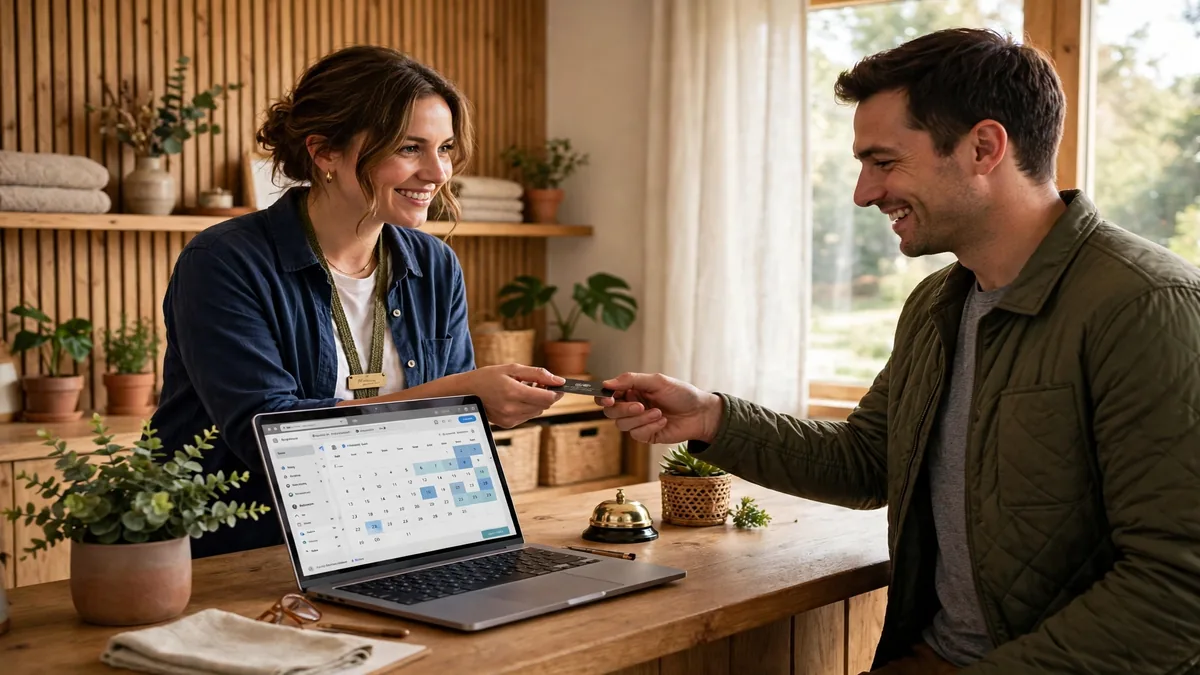
Guests default to OTAs because booking there feels effortless. Your website has to match that feeling: a booking engine that works in two or three taps on a phone, real-time availability, clear photos of the actual rooms, and transparent pricing with no surprises at checkout. If your site is slower or more confusing than the agency’s, visitors will drift back to the platform even when they found you first. Treat your digital presence as your shopfront — our analysis of digital hospitality marketing strategy shows how strongly presentation and trust signals shape whether a browsing guest becomes a booking guest. Add the details OTAs bury: parking, breakfast times, late check-in, pet policy. Every answered question removes a reason to book elsewhere.
Use Email and Repeat Guests to Increase Direct Hotel Bookings
Your cheapest bookings come from people who already know you. A guest who stayed last summer and receives a short, personal email in spring — with a small direct-booking perk such as a free breakfast or late checkout — is far more likely to book again than a stranger is to find you in search results. Build the list properly: capture email addresses at check-in and over your own Wi-Fi login, then send a few genuinely useful messages a year rather than a constant stream of discounts. The mechanics are the same ones behind any good lead generation blueprint: offer something of value, stay in touch, and make the next step obvious. Even a modest list of two thousand past guests can fill shoulder-season weekends without a single commission payment.
Answer Booking Questions Instantly, Day and Night
A large share of direct bookings are lost in the gap between a question and an answer. A couple checking your site at 11 p.m. wants to know whether the room has a cot, whether the car park has charging, or whether check-in can stretch to midnight. If nobody replies until morning, the OTA — which answers instantly — gets the booking. Live chat with out-of-hours cover, or an automated assistant trained on your property’s real details, closes that gap. Modern AI chatbots for customer support can handle the routine questions accurately and hand over to a person when the conversation needs one, which makes them realistic even for a small front-desk team.
Turn Your Restaurant and Experiences into Booking Magnets
OTAs sell rooms; you can sell the whole stay. A tasting-menu weekend, a spa afternoon, a guided walk that starts from your lobby — packages like these give guests a reason to book the complete experience directly, because the bundle simply does not exist on the agency sites. Your restaurant is a particular asset: locals searching for somewhere to eat discover the hotel, and dining guests convert into overnight guests at a surprising rate. Promoting food and drink well is a discipline of its own, as our look at food and beverage revenue marketing explains. Even one signature package per season gives your email list and social channels something worth sending.
Fix the Operations Behind the Booking
Direct-booking campaigns fail when the operation behind them creaks. If the booking engine shows the wrong availability, if confirmation emails land in spam, or if housekeeping cannot see special requests made on your own site, guests learn not to trust the direct channel. Audit the full journey monthly: search for your property as a guest would, book a room on your phone, and read every automated message that follows. The properties that grow direct share steadily tend to be the ones that treat operations and marketing as one system, much like the hospitality operational efficiency leaders who align staffing, systems and guest communication before spending on promotion.
Give Guests a Reason to Book Direct: Perks That Cost Little
Guests compare your rate with the agency’s and, if the numbers match, choose whichever feels safer. A direct-only perk breaks the tie without breaking rate parity: a complimentary breakfast, a late checkout, a drink on arrival, or first choice of room where availability allows. Each of these costs the hotel a fraction of the commission saved on the same booking, yet they are things an OTA cannot offer because the agency does not run your property. Say it plainly on your homepage and in the booking path — “book direct and breakfast is on us” is a clearer proposition than any discount code. Over time these small signals train your happiest guests to skip the middleman entirely, which is exactly the habit a healthy direct channel is built on.
Measure Your Direct Booking Share Every Month
What gets measured improves. Track one headline number — the percentage of room nights booked directly — alongside the commission you paid out. Set a realistic target, such as moving from 25 to 35 percent direct over two seasons, and review which channels produced the shift: email, packages, repeat guests, or walk-ins converted at the desk. Protect the rate parity rules your OTA contracts require, but compete on value the platforms cannot match: flexibility, personal touches, and the feeling that booking direct is simply the smarter way to stay with you. Small hotels win this game not by outspending the agencies, but by being easier to book, easier to reach, and more rewarding to return to than any intermediary.